
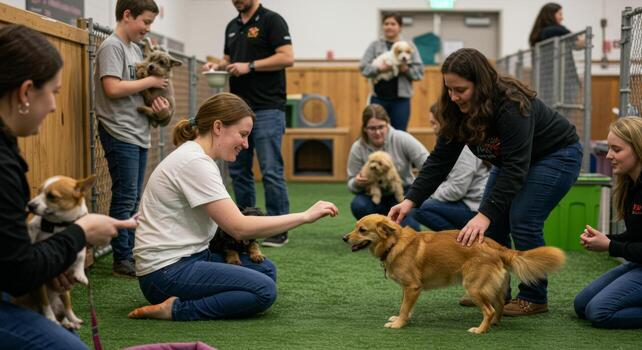
Along the corridors of the shelter, there are often many pairs of quiet eyes. Some hide behind blankets, some raise their heads to look around at the sound of footsteps, and others, not yet accustomed to human contact, simply twitch their ears gently in a corner of their kennels. For many stray animals, rescue is merely the first step. What follows is a truly long journey—rebuilding trust in humans, adjusting to care, and waiting for a suitable family.
An adoption application form looks straightforward, recording the applicant’s living situation, caregiving experience, family members, daily routine, and intention to adopt. Yet behind these written words lies the connection to an animal’s future for years to come. Whether the animal will be understood, patiently accompanied, or returned after an impulsive adoption often depends on whether someone engaged in serious communication, carefully verified details, and responsibly offered reminders in the early stages.
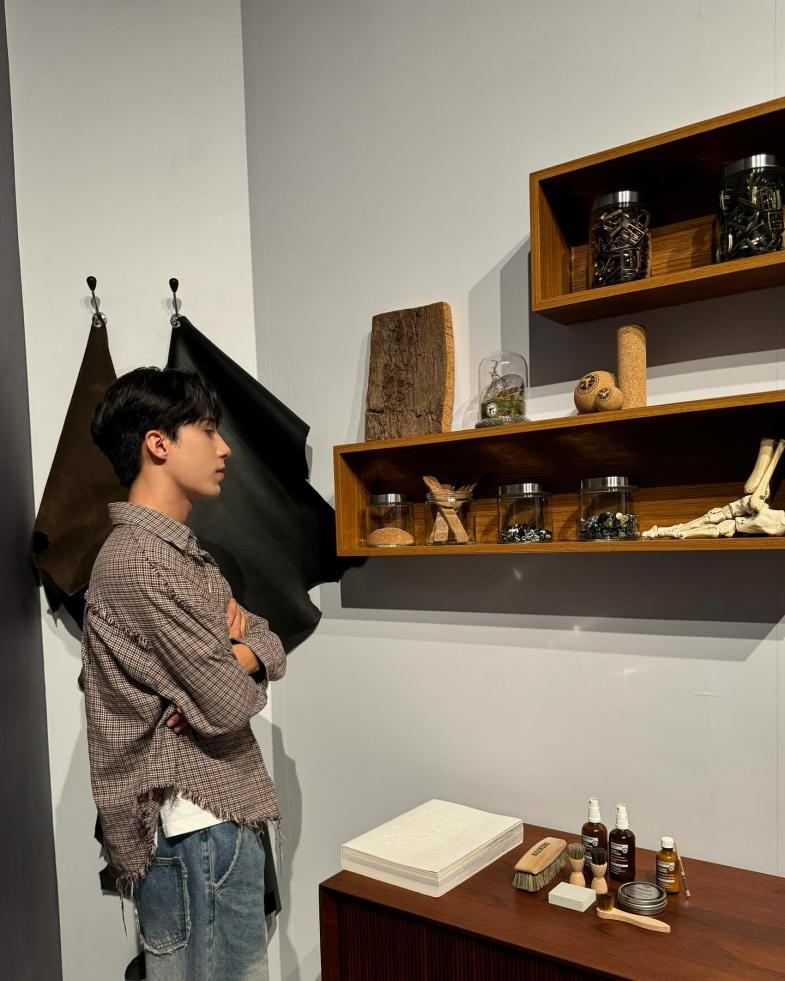
As a young volunteer, Chen Yu has long been involved in basic animal care, recording their emotional reactions, helping visitors understand adoption criteria, and finding more secure homes for these waiting lives through stacks of forms.
Young Volunteer
Resume:
Chen Yu, Major in Animal Science, University of California, Davis
Department: ICSO US Branch
01
Starting from a Shelter Shift: Understanding the Weight of “Waiting”
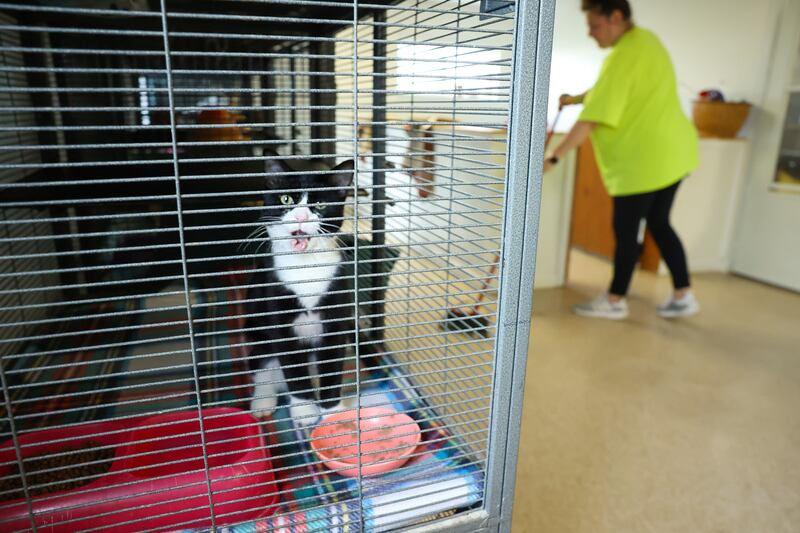
Chen Yu’s first involvement with the ICSO US Branch Stray Animal Rescue and Adoption Support Project was during a weekend volunteer shift at a local animal shelter. He initially expected the shelter to be a place full of interaction and companionship, but upon stepping inside, what he mostly saw was cleaning, recording, observing, and waiting. That morning, the staff led volunteers to familiarize themselves with the kennel areas. Newly arrived animals had to undergo basic health checks and observation first. Some dogs remained wary of strangers due to long periods of straying, while some cats arrived in a state of high tension, shrinking into corners at the sound of a opening door. Standing in front of a row of kennels, Chen Yu saw a grey-and-white cat lying quietly on a mat. It was no longer at the age that easily draws attention, nor was it as lively as a kitten, yet every time someone passed by, it gently raised its head to look.
The staff told him that many animals are not unrescued, but rather struggle to wait for a truly suitable adopter. Age, health condition, temperament, and living environment compatibility all affect adoption outcomes. Some animals had been adopted before, only to be returned due to a lack of preparation for care. For them, every environmental change is a new source of stress. This touched Chen Yu deeply. As an Animal Science major, he had studied animal behavior, companion animal care, and basic welfare knowledge, but at the shelter site, he connected this knowledge to real lives for the first time. Stray animal rescue is not something that can be borne by a simple “I like small animals”; it requires long-term care, scientific judgment, and stable responsibility. It was from that very shift that he decided to dedicate more time to the related projects of the ICSO US Branch.
02
Balancing Care and Recording: Practicing Tenderness with Precision
After officially joining the project, Chen Yu first handled basic care duties. The daily tasks seemed trivial: cleaning kennels, replenishing drinking water, checking food bowls, arranging blankets, sorting rescue supplies, and checking the expiration dates of care items. However, he quickly realized that the real difficulty lay not in finishing the work, but in performing every step stably, accurately, and without disturbing the animals. The project manager repeatedly emphasized that volunteers must not feed animals arbitrarily, make unauthorized health assessments, or forcibly pick up or tease animals to make them “appear affectionate.” For recently rescued animals, a quiet, stable environment and predictable care are far more important than overenthusiasm. Initially, Chen Yu instinctively wanted to approach frightened animals, but he learned to first observe their tails, ears, eyes, and body posture before deciding whether interaction was appropriate.
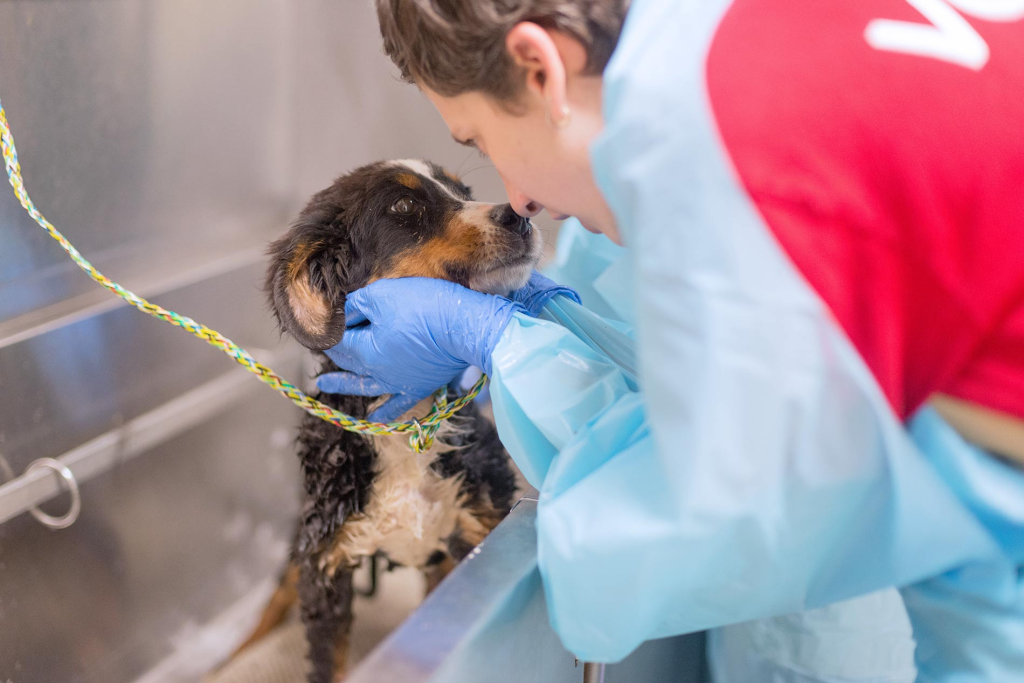
On one occasion, he was responsible for looking after a newly arrived puppy. The puppy stayed huddled at the back of its kennel, refusing to eat or approach the door. Chen Yu did not rush to reach out; instead, he placed food and water in designated spots as required, spoke to it softly nearby, and then slowly walked away to give it space to adapt on its own. Returning a few hours later, he found that the water bowl was slightly lower and the food had been gently touched. It was a tiny change, but it brought him immense peace of mind. Beyond daily care, Chen Yu also participated in updating animal information cards. He recorded the animals’ basic conditions, personality traits, adaptation statuses, and special notes. For example, some cats are suitable for quiet homes, some dogs require more outdoor activity, and some animals are sensitive to unfamiliar environments and require a longer adjustment period from adopters. Though these details were just a few lines of text, they helped potential adopters gain a more realistic understanding of the animals and reduced the risk of subsequent returns.
03
Making Adoption More Than Bringing an Animal Home: A Long-Term Commitment
As his volunteer experience grew, Chen Yu began assisting with Adoption Open Days. On these days, many visitors were drawn by photos and first impressions—some liked energetic dogs, some wanted a quiet cat, and others were just passing by and thought the animals looked cute. Chen Yu’s task was not to push people to fill out forms as quickly as possible, but to help them think through the decision to adopt more comprehensively. Together with his team, he introduced the adoption process to visitors and explained why every piece of information on the application form mattered. Questions about whether living spaces allowed pets, whether family members had allergies, whether there was dedicated daily time for companionship, and whether the applicant could afford vaccines, spaying/neutering, checkups, and unexpected medical expenses were not set up as barriers, but to ensure that adoption decisions were made with greater care.
Once, a young woman really wanted to adopt a high-energy, medium-sized dog, but she had a tight class schedule and no stable outdoor access at her residence. Rather than flatly rejecting her idea, Chen Yu walked her through the dog’s exercise needs, behavior training time, and daily care costs. In the end, she decided to join the shelter as a volunteer companion first and consider adoption when her life became more settled. Before leaving, she said to Chen Yu, “I used to think liking an animal was enough. Now I realize that liking them also requires preparation.” Those words stayed with Chen Yu for a long time. He gradually came to understand that the purpose of adoption support projects is not just to get animals out of shelters faster, but to ensure they go to places that are truly right for them. A cautious decision is sometimes far more responsible than a hasty adoption.
According to ICSO system records, over the past year or so, Chen Yu has participated in more than 20 volunteer service activities with the ICSO US Branch—including basic stray animal care, Adoption Open Day support, animal information card organization, rescue supply sorting, spay/neuter advocacy, volunteer training assistance, and project feedback archiving—accumulating over 180 hours of volunteer service. For his sustained commitment and conscientious performance, he was named an ICSO Three-Star Youth Volunteer and awarded an ICSO Volunteer Service Certificate.
Chen Yu shared that he used to think public welfare was mostly about helping people, but later realized that lives unable to express their needs verbally deserve to be treated with equal seriousness. What they need is not just food and shelter, but personalities that are understood, rhythms that are respected, and a home that will not easily give up on them. Behind the adoption forms, animal information cards, and patient conversations, what Chen Yu and his peers are doing is making goodwill more concrete and dependable. Stray animal rescue is not a brief moment of sympathy, but a long-term responsibility. May more young volunteers, like Chen Yu, protect lives in the small details, pass on hope through the waiting, and help those once-wandering animals find a home truly ready to embrace them.
