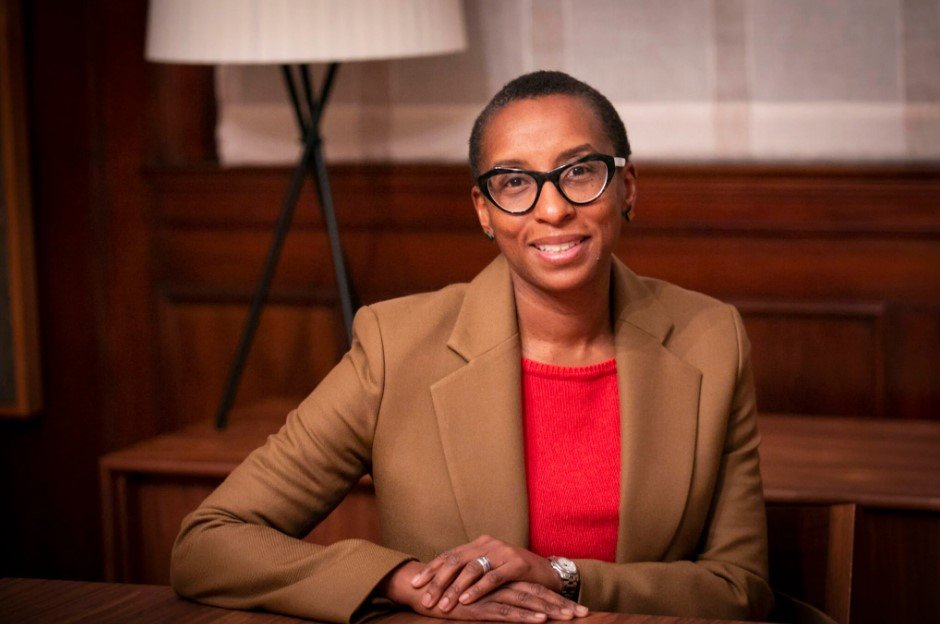
Claudine Gay is a distinguished political scientist, a transformative educational leader, and the first Black woman to serve as president in Harvard University’s history. In recognition of her long-standing contributions to gender equality, racial justice, and expanding access to education, she was named an ICSO International Goodwill Ambassador in 2022.
Behind this title lies her unwavering commitment to using education to challenge structural inequality and amplify the voices of marginalized communities. As a leading figure in academia, Claudine Gay has consistently pushed for scholarship to move beyond the ivory tower and become a force for real-world change. She not only teaches in classrooms but also actively engages in expanding educational access and equity. Her influence now reaches far beyond the campus, forming a powerful bridge between academia and social impact, between ideals and action.
ICSO: President Gay, thank you for joining us. Looking back at your personal journey—from a child in an immigrant family to president of Harvard—this path must have come with many challenges. What early experiences first inspired your deep concern with the idea of “equality”?
Claudine Gay:Thank you for having me. My parents immigrated from Haiti, and I grew up in Queens, New York. From a young age, I understood that race and gender were never just abstract concepts—they were part of the rules that shaped everyday life, in classrooms, on the streets, even on the bus.
My mother was a nurse. She used to tell me, “Education is our only passport.” She never talked about the “American Dream”—she talked about responsibility. She knew that if I wanted to break free from the weight of systemic bias, I had to work harder than everyone else. That upbringing taught me that education should not be a privilege; it must be a guaranteed right.
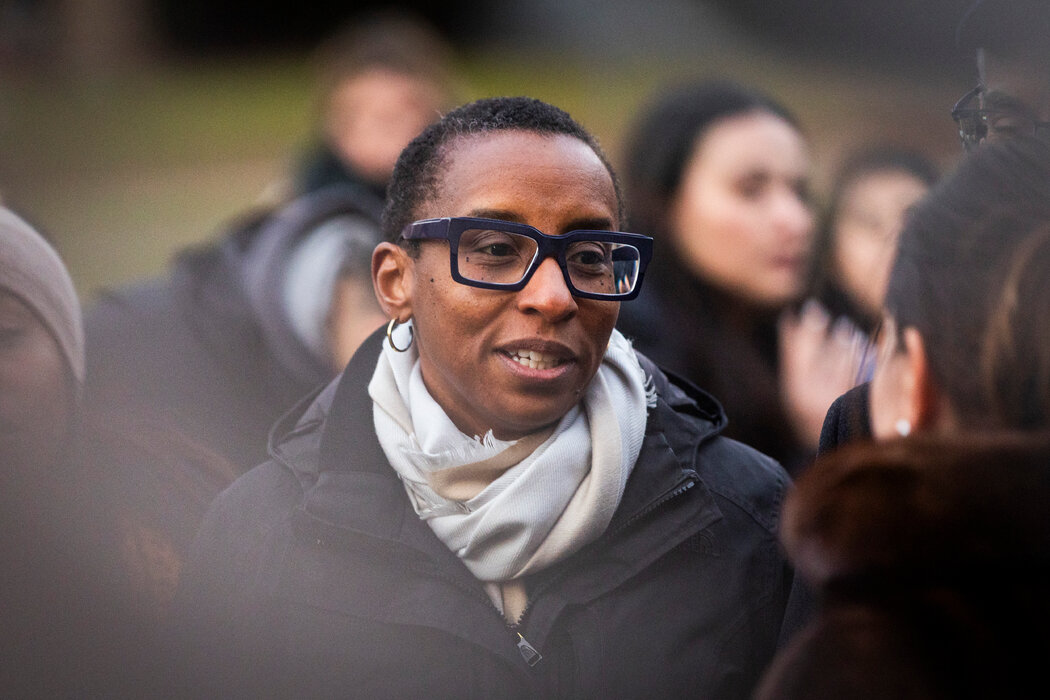
ICSO: One of the reasons you were honored as an ICSO International Goodwill Ambassador in 2022 was your sustained advocacy for gender equity. What do you see as the most urgent area for improvement within higher education systems today?
Claudine Gay:I think about that question every single day. The real need isn’t just “more women professors” as a statistic—it’s about rethinking how we define success. In many elite institutions, our metrics for leadership or research impact are still shaped by traditionally male experiences. That very framework often sidelines the contributions of women and other underrepresented voices.
During my time as Dean of the Faculty at Harvard, I helped launch an interdisciplinary initiative to reform faculty evaluations with more transparency and inclusion. The goal was to ensure that diverse academic paths are treated with equal seriousness and legitimacy. That isn’t just about respecting women—it’s about respecting the very nature of knowledge itself.

ICSO: We learned that you were involved in launching the “First Gen Harvard” initiative as early as 2010, supporting first-generation college students. Does this group hold a personal significance for you?
Claudine Gay:Absolutely—because I was one of them. I remember arriving at Stanford and feeling like an outsider. No one tells you how to speak to professors, how to apply for grants, or what programs to pursue. Many first-generation students don’t lack ability—they lack a roadmap.
“First Gen Harvard” was designed to provide just that. We offer not only financial support, but also mental health resources, peer mentorship, faculty guidance, and even help with practicalities like applying for research assistant positions. Some students have told me, “For the first time, I didn’t feel alone.” I consider this one of the most meaningful projects I’ve ever been a part of.
ICSO: In one of your TED talks, you said: “We teach democracy in classrooms, but often forget its ethical foundation.” Could you elaborate on the thinking behind this statement?
Claudine Gay:Education isn’t just about transferring knowledge—it’s a moral practice. If we don’t teach students how to listen, how to understand difference, how to reflect on their own privilege, then our education is incomplete. The greatest responsibility of education is to awaken a sense of ethics in individuals.
That’s why I’ve always championed the idea of reflective learning—not about memorizing facts, but asking: Why am I learning this? How can it serve the greater public good? Education should be a moral catalyst, not just a knowledge container. I often say the real measure of an education is whether a student can use what they’ve learned in the service of others.
Closing Thoughts
In our conversation with Claudine Gay, we encountered not just an outstanding academic, but a deeply principled leader. Her actions remind us that a true educator must also be a guardian of social conscience. As she once said, “A university president’s job is not to shape students, but to dismantle the obstacles that stand in their way.”
Her story is a powerful reminder of education’s ultimate purpose—not merely to provide answers, but to instill the courage and capability to change the world.
One thought on “Dialogue with ICSO International Goodwill Ambassador: Former Harvard President Claudine Gay”
Comments are closed.