Public cultural spaces carry a city’s historical memory, artistic expression, and spiritual life. People step into museums, art galleries, theaters, and exhibition spaces to view works, listen to explanations, and participate in activities, which seems like a completely natural thing to do. However, for individuals with visual impairments, mobility limitations, hearing impairments, or those unfamiliar with the local language, behind an ordinary visit often lie many obstacles that are not easily noticed. In the Public Cultural Accessibility Support Project under the International Charity Support Organization (ICSO) UK Branch, youth volunteers visit different types of cultural venues to participate in services such as exhibition information transcription, accessible route testing, audio guide optimization, on-site guidance, and visitor support. Through continuous and meticulous actions, they make public cultural spaces friendlier. Today, let us take a closer look at the public welfare story of ICSO youth volunteer Zhao Qing.
Youth Volunteer
Resume: Zhao Qing | Culture and Communication-related major, a UK university Department: ICSO·UK (United Kingdom) Branch

01 In the Public Exhibition Hall: First Time Realizing that Accessibility Is Not Just a Slogan
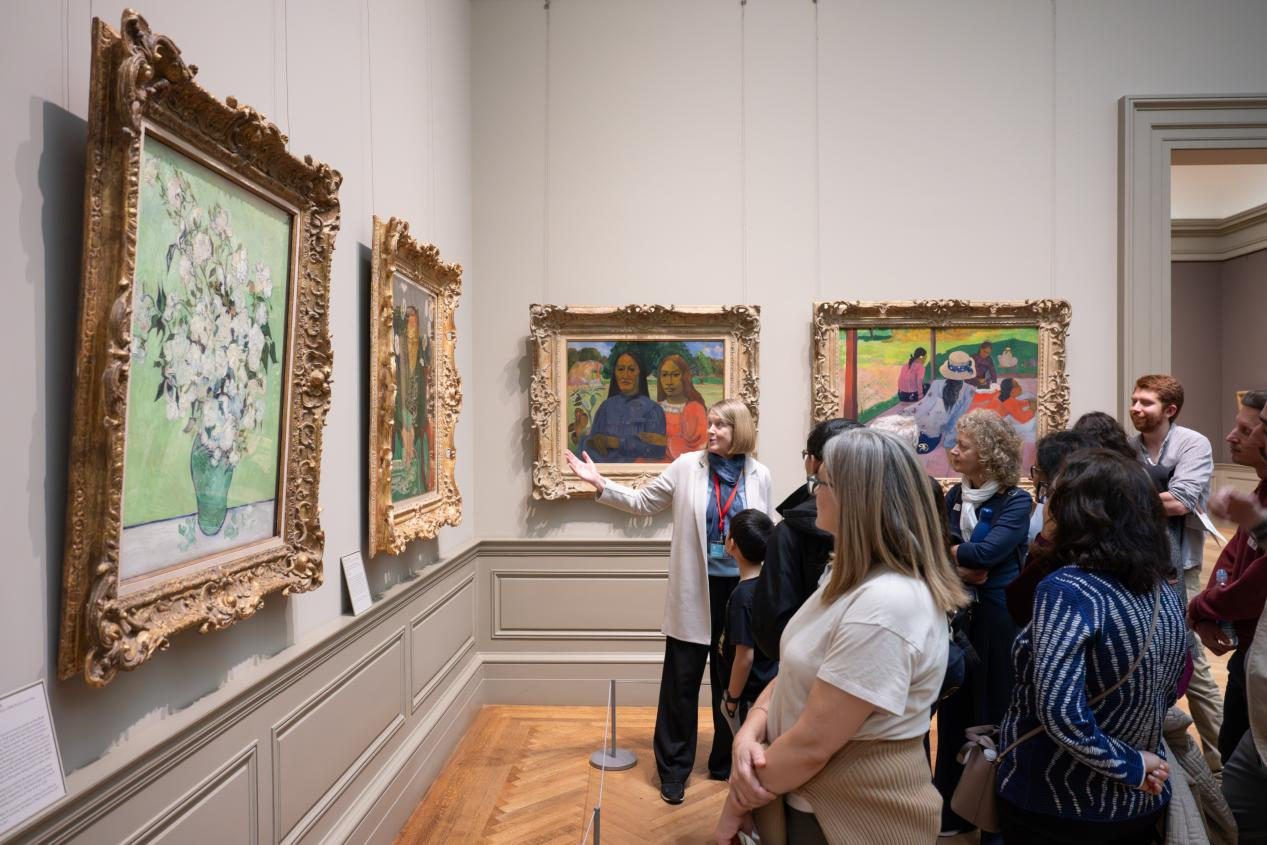
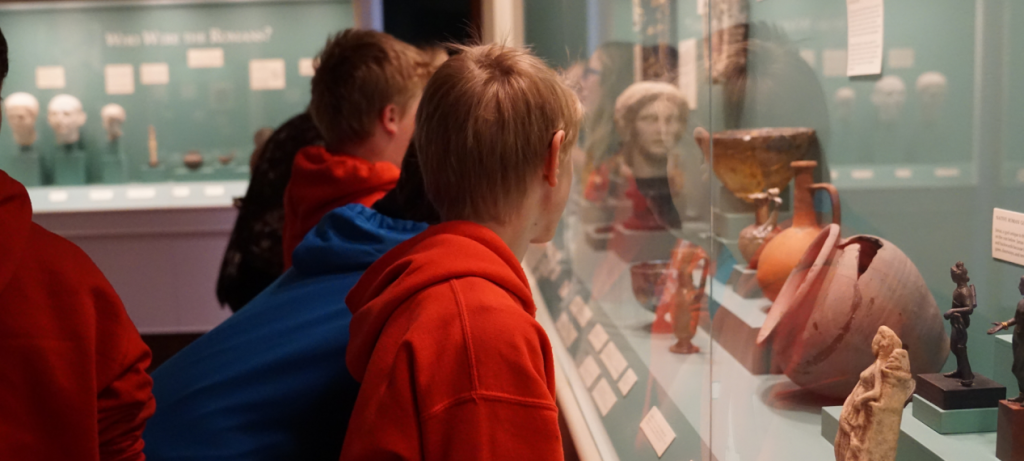
Zhao Qing’s connection with the ICSO UK Branch Public Cultural Accessibility Support Project began with a field volunteer service at a public art exhibition. That event was held at a small exhibition space in London. The hall was not large, the wall explanations were complete, and staff were available at the entrance for inquiries. When she first arrived at the scene, Zhao Qing thought her main tasks were to maintain order, assist with check-ins, and answer questions from visitors. However, as several visitors with special accessibility needs entered the hall, she quickly realized that her past understanding of “open cultural spaces” was still too simplistic. For most visitors, following direction signs, reading text on the walls, and pausing for a moment in front of artwork is a naturally completed process. But for visually impaired visitors, the shape, size, material, color, figure placement, and spatial relationships of a work all need to be reconstructed through language.
For visitors with mobility difficulties, an inconspicuous step, a narrow passageway, or a temporarily adjusted exhibition line could change the entire visiting experience. That day, Zhao Qing accompanied a visually impaired visitor to a mixed-media installation. The work was made of metal, textiles, and lighting, with a certain distance kept around it. She did not rush to use subjective terms like “beautiful,” “stunning,” or “impactful.” Instead, she first explained that the work was placed slightly to the left of the hall’s center, reaching nearly an adult’s shoulder height, with a metal frame supporting the surface, soft textiles hanging down from the middle, and lighting casting shadows from behind. She tried her best to break down what she saw into concrete information, allowing the visitor to form a clear mental picture. After the visit, the person said, “Explaining it like this lets me know what kind of artwork I am standing in front of.” This sentence left a deep impression on Zhao Qing. She began to understand that accessible cultural service is not about experiencing artwork on behalf of others, nor is it about replacing professionalism with good intentions; rather, it is about helping different people obtain clear enough information so that they can form their own understanding and feelings.
02 From Text to Voice: Organizing Exhibition Information into Easily Understandable Content
After officially joining the project, the first type of work Zhao Qing participated in was compiling exhibition audio guides and concise explanatory materials. She originally thought that as a student majoring in culture and communication, processing text content should not be difficult. But when she actually started drafting guide transcripts, she realized that this work was not simply “changing written language into spoken language,” but finding a balance among accuracy, clarity, and respect. In its project training, the ICSO UK Branch explicitly required that volunteers must not arbitrarily add information not presented by the artwork, package personal emotions as conclusions about the work, or treat recipients with a condescending tone. Especially in audio guides aimed at visually impaired visitors, volunteers need to explain the visual content, spatial structure, material features, and display relationships as clearly as possible, rather than directly telling them “what this work expresses.” Many of the original exhibit descriptions Zhao Qing and her team received often carried heavy academic jargon.
For example, some texts would say “the work discusses the state of individual existence in modern cities,” but if put directly into an audio guide, it would be difficult for listeners to picture it. Zhao Qing and her team would deconstruct it together: buildings occupy the main part of the picture, figures are placed at the edges, the color tone is dark, the lines are dense, and the overall image presents a compressed and crowded visual effect. This kind of expression is simpler, yet it allows listeners to hear concrete details rather than just receiving an abstract judgment. In addition to guide texts, Zhao Qing also participated in organizing concise venue visit guides. She would sort out entrance locations, service desk directions, elevator routes, rest area layouts, accessible restroom locations, emergency exits, and transition paths between exhibition halls in advance. To make the information more accurate, she and her team members frequently double-checked the on-site signage to confirm which areas were prone to misunderstandings and where additional reminders were needed.
03 Turning Good Intentions into Reliable Support Through Repeated On-Site Services
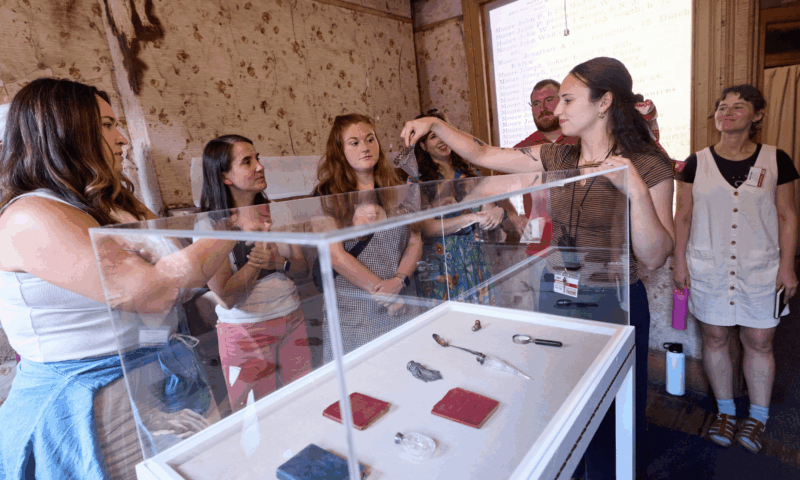
As her service frequency increased, Zhao Qing began to take on more on-site assistance and route testing work. During a weekend public cultural open day, foot traffic at the venue increased noticeably, including families with children, elderly visitors, wheelchair users, and hearing-impaired participants who required text-assisted information. Zhao Qing was assigned to the entrance area to provide route inquiries and auxiliary information explanations. At first, whenever she saw someone stop to check direction signs, she would immediately step forward and ask if they needed help. But the project coordinator reminded her that good volunteer service does not mean the more proactive, the better. For many people, the most comfortable form of support is appearing promptly when they need it, rather than being given special attention the moment they step through the door. Zhao Qing quickly adjusted her approach. She would first observe whether the visitor was looking for directions, had questions about entrance information, or signaled to the staff, and then politely state in brief: “We have information on hall routes, accessible facilities, and quiet rest areas here.
If you need anything, I can introduce them to you.” This adjustment gave Zhao Qing a more concrete understanding of “respect.” Public welfare service is not about deciding what is convenient for others, but about providing clear information and suitable options so that participants can maintain their own pace and judgment. During the creation of a public cultural space visit guide, Zhao Qing and her team recorded the route starting from a nearby subway station exit. They checked whether the sidewalks were even, whether the pedestrian traffic light timing was sufficient, whether the entrance signage was eye-catching, and whether the ramps were convenient to navigate. After entering the venue, they confirmed the locations of elevators, restrooms, service desks, hall entrances, rest seating, and temporary exhibition areas floor by floor. During the walkthrough, the team found that the direction signs on a certain floor were placed behind a corner, making them easy for first-time visitors to miss. Zhao Qing recorded this situation in the feedback form and suggested adding temporary direction signs at that location during event periods, while arranging for volunteers to be stationed there briefly.
04 Conveying Goodness Through Details: Demonstrating Youth Volunteers’ Public Cultural Responsibility
Later, event participants mentioned in their feedback that the on-site route explanations were clear, staff could be found quickly when problems arose, and the visiting process went much smoother than expected. For Zhao Qing, such affirmation was not overstated, yet very genuine. She knew that what she and her team did might only make a section of the path easier to walk, an explanation easier to understand, or a person feel a little less anxious when stepping into an exhibition hall. However, it is precisely these concrete, small changes that bring public cultural spaces one step closer to more people.
According to ICSO system records, over the past year or so, Zhao Qing has participated in more than 20 volunteer service activities for the ICSO UK Branch, including public cultural accessible audio guidance, exhibition information transcription, visit route testing, event on-site support, volunteer training assistance, and project feedback archiving, accumulating over 170 hours of voluntary service time. Thanks to her continuous involvement and conscientious performance in the project, she was awarded the title of ICSO Three-Star Youth Volunteer and received the ICSO Volunteer Service Certificate. In her project summary, Zhao Qing shared that after participating in this kind of public welfare service, she gained a deeper understanding of the word “public.” Public cultural spaces should not only be convenient for those who are familiar with the routes, move freely, and read exhibition labels smoothly; they should also accommodate those who require more information support, spatial support, and communication support. Public welfare is not always grand and earth-shattering; it can also be a carefully organized guide transcript, a clearer route map, or a non-intrusive yet timely reminder.
From audio guidance to on-site accompaniment, from route testing to feedback organization, Zhao Qing has always participated in every service with a detailed, restrained, and responsible attitude. She has brought the expressive skills, information organization capabilities, and public awareness from her culture and communication major into charity practice, while continuously understanding the long-term value of accessibility construction through genuine service. The significance of youth volunteers lies not only in showing up at event sites, but also in whether they can transform good intentions into stable, professional, and sustainable support. In the future, Zhao Qing will also continue to participate in public cultural accessibility services within the public welfare projects of the ICSO UK Branch, using clearer audio guides, smoother routes, and well-measured companionship to allow more people to step into cultural spaces with peace of mind and equally feel the warmth of art, history, and city life.