Whether a traditional craft can be remembered often depends on more than a finished product in a display case or a few lines of introduction in a brochure. More often, it is hidden in the repeated hand adjustments of the inheritor, the subtle sounds of tools contacting materials, and the practical reminders spoken in a local accent. If these details are not documented in a timely manner, many seemingly ordinary procedures may slowly fade away over time.
In the Intangible Cultural Heritage Visual Documentation and Digital Archival Protection Project under the China Branch of the International Charity Support Organization (ICSO), youth volunteer Wang Lin participated in tasks such as collecting visual materials of traditional crafts, compiling oral histories, annotating procedural information, and supporting public welfare communications. Rather than viewing non-material cultural heritage protection as a simple visit or photoshoot, she learned—through repeated visits, records, and organization—how to preserve accessible, referenceable, and disseminable documentation for living traditional crafts in a more respectful and accurate way.
Youth Volunteer
Personal Profile:
Wang Lin, Major related to Journalism and Communication, Nanjing University
Department: ICSO·CN (China) Branch

01 Seeing the Time Behind Traditional Crafts, Starting from a Single New Year Painting
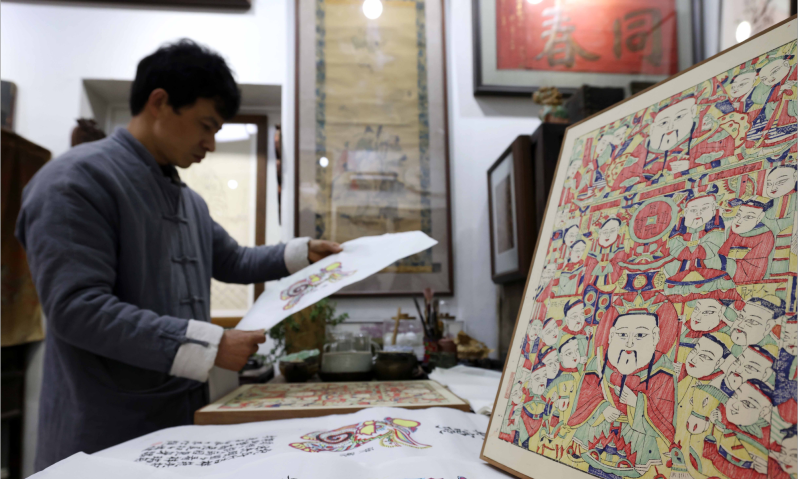
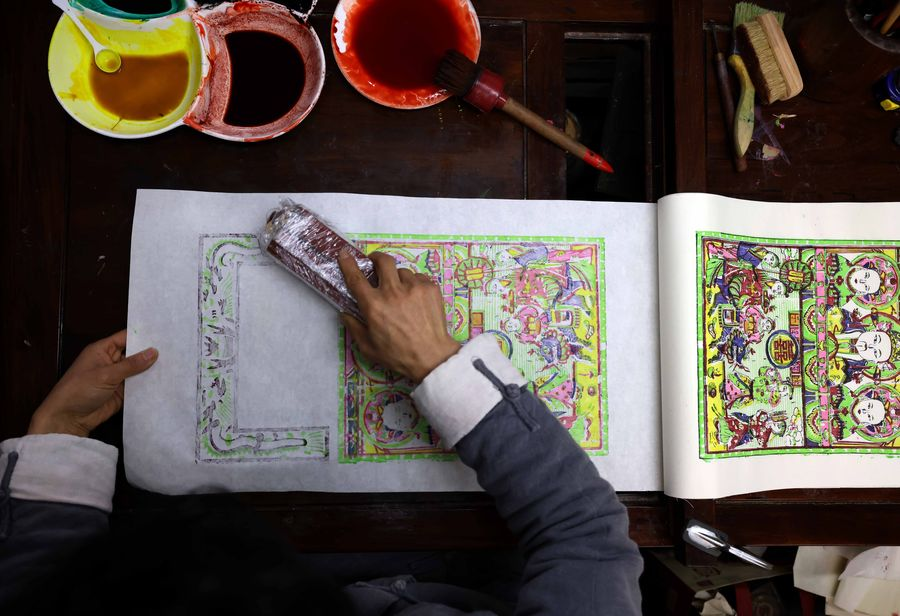
Wang Lin’s participation in the ICSO China Branch’s Intangible Cultural Heritage Visual Documentation and Digital Archival Protection Project began with a woodblock New Year painting shooting assignment. On that day, she accompanied the project team to a traditional New Year painting workshop. The room lacked elaborate decorations: woodblocks of various sizes leaned against the walls, while pigments, brushes, Xuan paper, and half-finished prints were spread across the tables. Sitting at the workstation, the master craftsman mixed colors while introducing the complete workflow—from initial sketch and block carving to color registration and printing—to the volunteers.
Before this, Wang Lin’s understanding of traditional crafts came mostly from exhibition labels and short video platforms. She knew that woodblock New Year paintings were a form of folk art, and that many traditional crafts face difficulties with inheritance. However, standing right beside the workbench and watching the master craftsman repeatedly adjust paper placement, control brush pressure, and align subtle lines across different blocks, she realized that a seemingly simple New Year painting carries decades of tactile skill, experience, and judgment behind it.
During filming, the master craftsman made a remark that left a deep impression on her: “When the finished print is hung up, everyone sees the celebration; but the truly difficult parts all happen before it gets hung.” This sentence made Wang Lin realize for the first time that the purpose of visual documentation is not just to capture the final attractive artwork, but also to preserve the often-unseen process of preparation, waiting, trial, error, and correction.
After that event, Wang Lin proactively applied to join the ICSO·CN (China) Branch’s Intangible Cultural Heritage Visual Documentation and Digital Archival Protection Project. She hoped not merely to observe traditional culture from the sidelines, but to participate in documenting it in a more grounded way—allowing more people to see how a craft endures through real people, specific actions, and tangible time.
02 Camera Lenses Are Not Just for Finished Products, But for Crafting Details
After officially joining the project, the first task Wang Lin handled was assisting with the visual collection of traditional craftsmanship. Before filming, the project team provided a briefing, reminding volunteers to respect the inheritors’ work rhythms and avoid interrupting the production process. During interviews, volunteers needed to confirm in advance whether the subject consented to disclosing their name, voice, and image; when transcribing text, they were expected to remain faithful to the original meaning rather than changing key details to make a story more dramatic.
Upon stepping onto the filming set, Wang Lin discovered that non-heritage visual documentation differs from standard event photography—it is not simply a matter of getting a clear shot. The core of a traditional craft is often hidden within tiny movements: the angle of the wrist while brushing ink, the force applied when the carving knife lands, the minute misalignments during paper registration, and the subtle color shifts before a piece dries. If these details are not recorded, it becomes difficult for outsiders to understand why the craft requires long-term training.
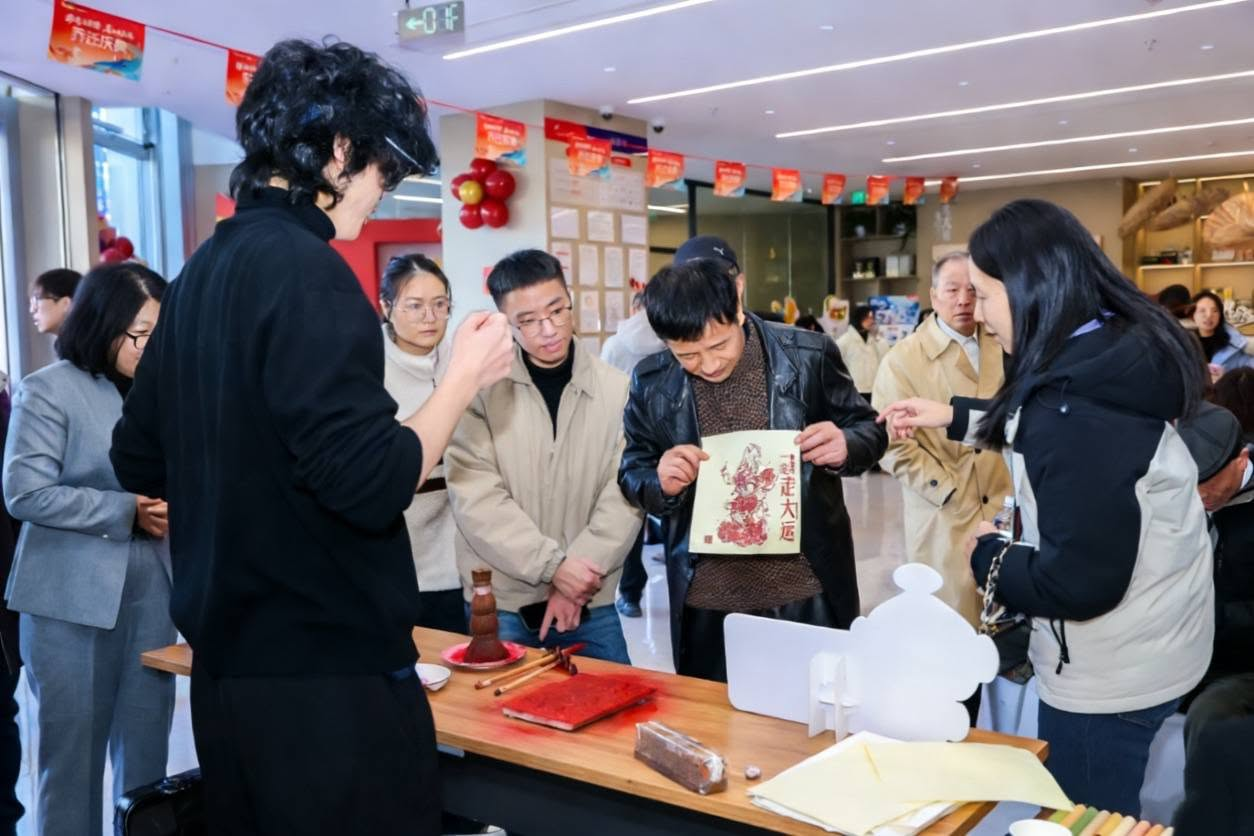
On one occasion, Wang Lin was responsible for filming an artisan crafting paper-cut light shades. Initially, out of habit, she aimed her lens at the completed pieces to capture prettier shots. Later, the project instructor reminded her that the most important element was not how beautiful the shade looked once illuminated, but how the paper was folded, how the knife turned along curves, and how the edges of the pattern were kept intact. Wang Lin adjusted her approach, focusing her lens more on hand movements and tool changes while noting the names of each step and key precautions alongside the footage. After filming, she spent considerable time organizing the material, clearly labeling steps such as “paper cutting,” “drafting,” “pattern carving,” “edge patching,” and “shaping.” She gradually realized that media recording is not a simple souvenir; it is a form of responsible documentation. Only by filming the process clearly and writing accurate annotations can future generations truly understand the technical craftsmanship embedded in the work.
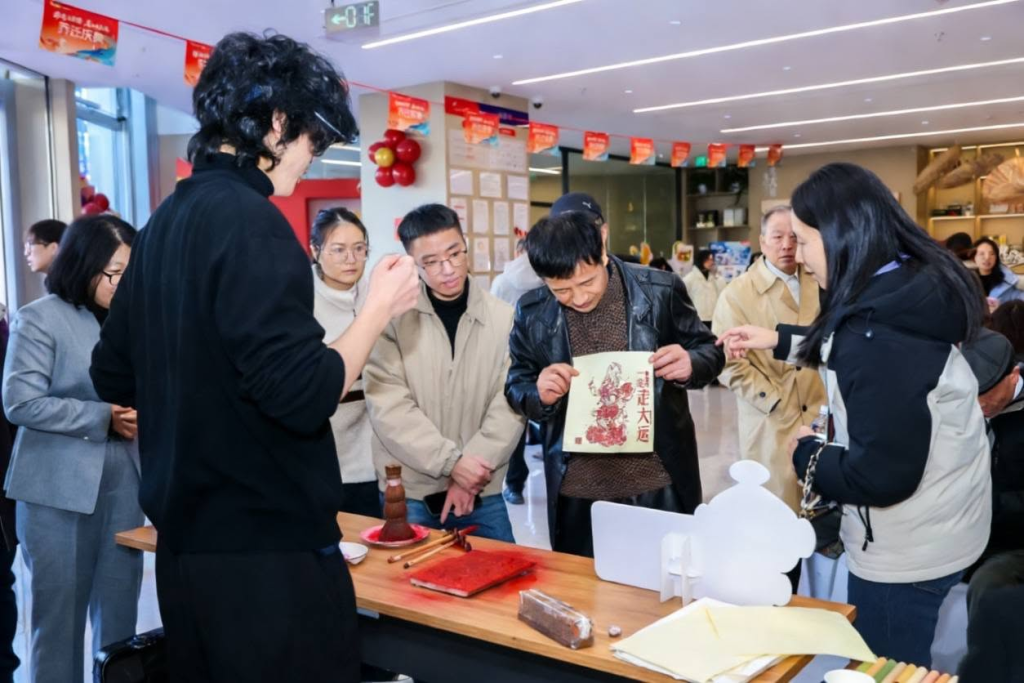
03 From Interview Recordings to Digital Archives: Making Materials Referenceable, Usable, and Disseminable
Compared with on-site filming, post-production organization is often quieter and more time-consuming. After a collection session, the project team receives a vast volume of photos, videos, interview recordings, and handwritten notes. Wang Lin collaborated with other volunteers to classify these materials: identifying which belonged to procedural footage, which were oral accounts, which were suitable for public outreach, which were intended solely for internal archiving, and which required further confirmation with the inheritors.
She quickly learned that digital archival organization is not as simple as placing files into folders. A video without labels for capture time and procedure names becomes difficult to use later; an interview without key terms indexed takes a long time to search; and unclear copyright authorization info can create issues for inheritors during public dissemination. To minimize these problems, Wang Lin established clearer naming conventions for each set of files and organized interview contents into structured sections, including “craft origins, production steps, current state of inheritance, personal experience, and future expectations.”
While compiling an interview about paper-cutting techniques, Wang Lin noticed that the inheritor repeatedly mentioned, “When cutting, you cannot look only at the pattern; you must also keep in mind how the paper connects.” At first, she thought this was merely a general piece of advice. However, after cross-referencing it with the video footage, she realized that this statement directly pertained to the structural stability of the entire piece. If the connection points were handled improperly, even the most intricate pattern would break easily. She extracted this explanation separately, added it to the procedural notes, and reminded future filming volunteers to pay close attention to decisions that appear “ordinary yet prove critical.”

04 Fulfilling Cultural Preservation Responsibilities as a Youth Volunteer Through Sustained Records
As her participation in the project grew, Wang Lin gradually evolved from a standard volunteer into a core youth team member capable of assisting with preliminary communication, on-site filming, and material verification. Before each event, she researched the relevant craft background in advance to prepare interview questions; during filming, she ensured that her presence did not disrupt the artisan’s normal work; and after events, she participated in material reviews, recording missed shots, unclear descriptions, and items needing further confirmation to help the team refine future collection plans.
According to official ICSO system records, over the past year and a half, Wang Lin participated in more than 20 volunteer service activities with the ICSO China Branch—including non-heritage visual collection, oral history compilation for traditional crafts, digital archive classification, public welfare communication support, volunteer training assistance, and project feedback archiving—accumulating over 180 hours of voluntary service. In recognition of her sustained dedication and outstanding performance, she was awarded the title of ICSO Three-Star Youth Volunteer and presented with the official ICSO Volunteer Service Certificate.
Through her volunteer service at ICSO, she also observed that different branches focus on distinct public welfare issues. The UK Branch engages in public cultural accessibility support, the US Branch conducts disaster emergency response and public advocacy, while the China Branch leverages local cultural resources to advance non-heritage documentation and digital archiving. Although the formats differ, the underlying direction remains consistent: empowering youth volunteers to respond to real social needs through professional, steady action.
Traditional craftsmanship belongs not only to the past, nor solely to display cabinets and festivals. It lives in the lines of an artisan’s palm, in the process of repeatedly refining a work, and in the hearts of those willing to document and spread it. May more youth volunteers follow Wang Lin’s example—preserving time to be seen for traditional crafts through every frame of image, every oral account, and every digital file—allowing these flowing cultural memories to be genuinely recognized by more people.