Every return of migratory birds is a letter written by nature to the earth. Wetlands serve as temporary sanctuaries along their arduous journeys and represent an irreplaceable living space within urban ecosystems. However, with escalating issues such as plastic pollution, abandoned fishing line, and habitat degradation, many migratory birds face harm in the very places meant for rest after crossing mountains and seas. Protecting wetlands is not merely about safeguarding a body of water; it is about defending the shared future of humanity and nature.
Within the nature conservation initiatives of the International Civil Society Organization (ICSO), a group of youth volunteers has stepped into wetlands—clearing litter, recording bird behavior, and assisting in wildlife rescues. Through steady and grounded actions, they build a shield of safety and hope for lives on the wing. Today, let us step closer to the public welfare journey of ICSO youth volunteer Chen Hao.
Youth Volunteer
Biography:
Chen Hao, Majoring in Biological Sciences at University College London (UCL)
Affiliation: ICSO UK Chapter

01
Starting with an Injured Greylag Goose: Witnessing the Urgency of Wetland Conservation
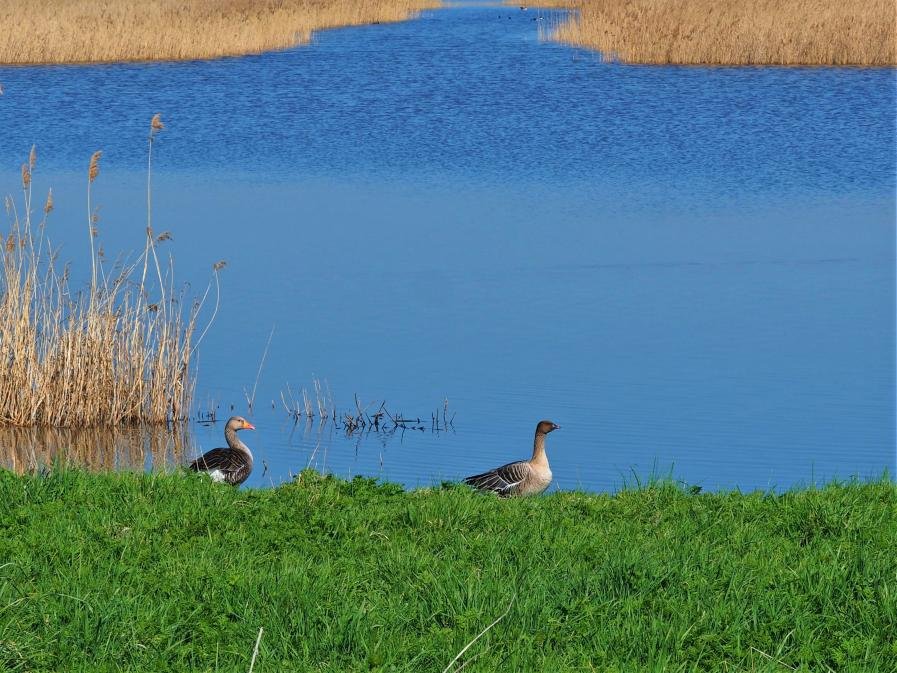
Chen Hao first grasped the critical urgency of wetland conservation during a weekend hike. Early that morning, he and his classmates passed by a wetland park on the outskirts of London. As thin mist hung over the water, wild ducks and swans drifted on the surface while bird calls echoed from afar. Just as he prepared to capture the scene, he noticed a greylag goose struggling desperately in shallow water. Its wing was entangled in an abandoned fishing line; the more it thrashed, the tighter the cord bound.
Faced with this situation, Chen Hao acted immediately. He and his friends contacted local wildlife rescue authorities and, under expert guidance, maintained a safe distance while dispersing onlookers to prevent secondary stress to the bird. When rescuers arrived and carefully cut away the line, deep ligature marks were already visible along the edge of the goose’s wing.
The incident left a profound impression on Chen. As a biological sciences student, he had studied ecosystems, species preservation, and biodiversity in lectures, yet witnessing a living creature harmed by carelessly discarded human trash delivered an impact far more immediate than text on a page. He realized for the first time that ecological protection is not an abstract debate—it exists right along a trail, within a patch of grass, or in a segment of discarded fishing line.
Upon returning to campus, Chen proactively researched material on wetland preservation, bird migration, and urban ecological restoration. Searching for relevant public welfare initiatives, he discovered the “Wetland Guardians” nature conservation program led by the ICSO UK Chapter. The initiative spanned shoreline cleanup, migratory habitat patrols, bird activity tracking, public environmental outreach, and wildlife rescue assistance. Chen submitted his volunteer application without hesitation. Days later, a confirmation email arrived from ICSO UK, officially welcoming him as a youth volunteer. To him, this represented not only civic engagement, but an opportunity to merge academic knowledge with hands-on conservation.
02
Joining “Wetland Guardians”: Bringing Academic Training to the Frontlines
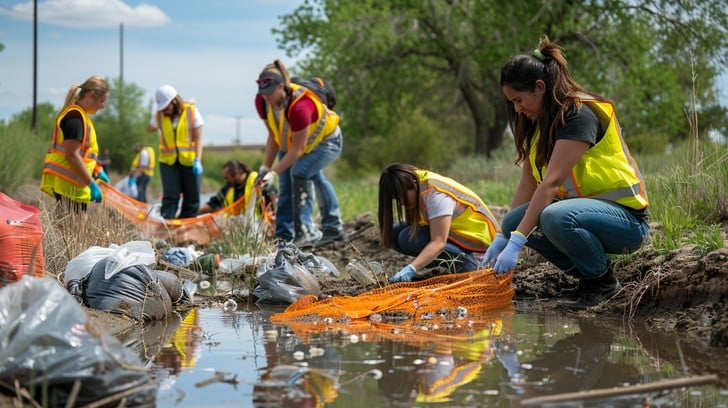
Chen’s inaugural assignment upon joining the initiative was shoreline litter clearing—a task that proved demanding in practice despite its straightforward premise. Wetland edges feature complex terrain: trash hides within reed beds, plastic bags are trapped in thick mud, and stray fishing lines, bottle caps, and foam fragments lie scattered along the water’s edge. To avoid disturbing avian habitats, volunteers had to advance slowly along designated routes without trampling vegetation or approaching nesting areas.
Assigned to log waste types and quantities, Chen sorted abandoned line, plastic bottles, and food packaging as he collected them. That day, after five continuous hours of effort, the team removed dozens of bags of waste, predominantly composed of discarded fishing line and plastic items. By the end, Chen’s gloves were caked in mud and his pant legs soaked by wet water grass, yet he offered no complaints, carefully carrying the final waste bag to the collection point.
In subsequent assignments, Chen participated in migratory bird patrols and population monitoring. Standing at observation posts during frigid mornings was challenging. To avoid startling flocks, volunteers often remained motionless and silent for nearly an hour at a time. Chen meticulously documented every flight pattern and unusual movement. On one occasion, noticing a waterbird moving sluggishly with an apparent leg injury, he immediately reported it to the project coordinator and assisted in contacting professional rescuers. It was later confirmed that fine line had wrapped around the bird’s leg; early detection prevented further tissue damage. The experience solidified his commitment to the cause. He understood that while volunteers are not professional rescuers, timely observation, precise documentation, and standard reporting form vital links in the conservation chain.
03
Advocating for Wetlands: Bringing Ecological Awareness to the Public
Beyond field patrols, Chen actively contributed to ICSO’s public outreach campaigns. Alongside his team, he designed educational flyers explaining migratory routes, wetland ecosystem functions, and the hazards discarded lines and plastics pose to wildlife in accessible terms.
When passersby initially walked past without stopping, Chen remained undeterred, engaging people with concrete examples: “Many bird injuries don’t stem from massive industrial pollution, but from a single discarded piece of fishing line.” His approach resonated with residents, prompting many to pause and listen. By the end of the campaign, numerous community members signed the advocacy pledge board, committing to cut single-use plastics and participate in local wetland cleanups.
To engage younger audiences, Chen launched the “Leave No Trace Wetlands” initiative within campus student societies, encouraging peers to pack out trash after outdoor activities and share wetland facts on social media. He compiled illustrated posts covering common wetland species, plastic impacts on wildlife, and actionable ways everyday individuals can support conservation. His content generated widespread shares across campus networks, prompting several students to reach out and join subsequent volunteer efforts.
As his tenure grew, Chen transitioned from an entry-level volunteer into a core team coordinator. During a large-scale wetland cleanup, he assisted project leaders with group coordination, briefers on safe working distances, waste sorting rules, and wildlife protection protocols. Following the event, he consolidated field data into a concise summary report detailing waste categories, volume, and spatial distribution, providing actionable insights for future project planning.

04
Over 300 Hours of Volunteering: Defining Youth Responsibility in Environmental Action
According to ICSO records, over the past two years, Chen Hao has participated in more than 30 nature conservation volunteer activities with ICSO. His service spans wetland cleanup, migratory bird patrolling, wildlife rescue support, community environmental outreach, campus advocacy, and project documentation, accumulating 340 volunteer service hours. Recognizing his sustained dedication and exceptional performance in the “Wetland Guardians” initiative, ICSO awarded him the Three-Star Youth Volunteer designation alongside an official ICSO Volunteer Service Certificate.
Chen’s journey demonstrates that youth volunteer responsibility extends beyond physical presence on site—it lies in sustained attention to social issues and meaningful action. From discovering a snared greylag goose to coordinating field patrols, litter collection, and public campaigns, he integrated academic learning into public service while gaining a deeper understanding of human-nature coexistence.
To protect wetlands is to safeguard the safe harbors of life; to protect migratory birds is to preserve our shared ecological home. May more young volunteers join nature with responsibility like Chen Hao, acting to secure a greener future—ensuring every migration reaches a safe destination and every wetland reclaims its vitality.