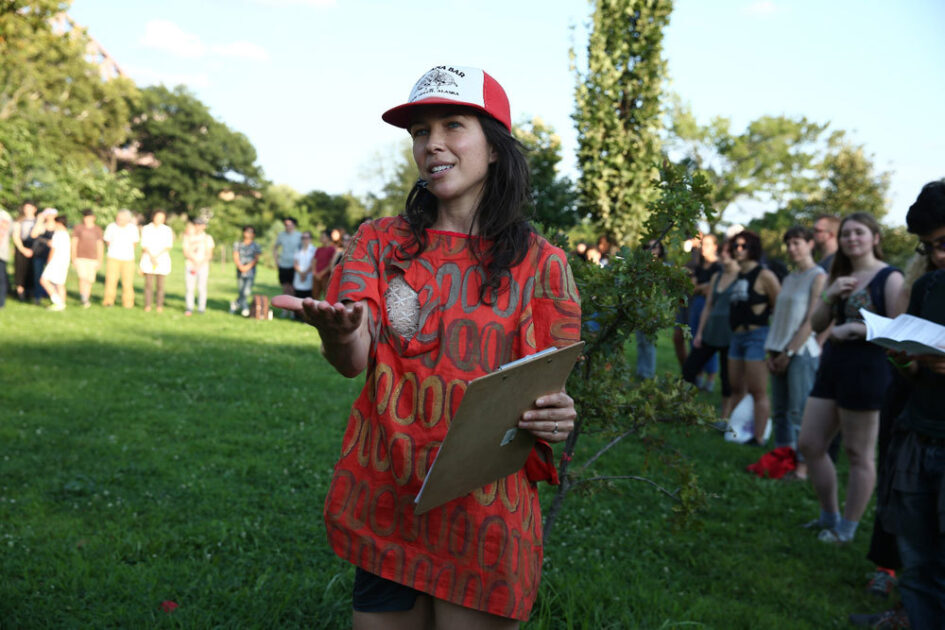
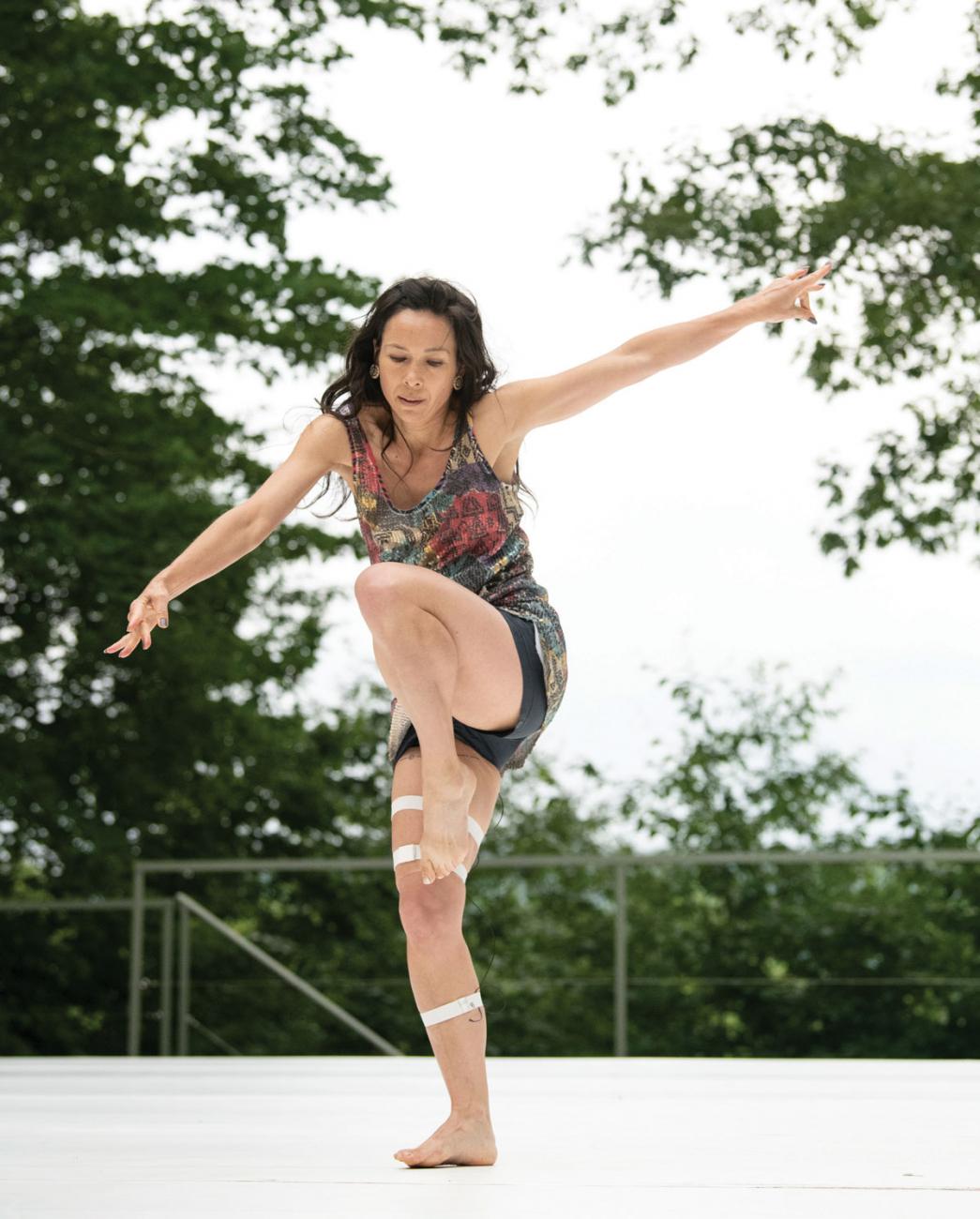
Emily Johnson, a renowned American dance artist and writer, is also the organizer of the First Nations Dialogues in New York/Lenapehoking. Her deeply community-engaged creative approach has made her one of the most distinctive voices in the international art world. Johnson’s works transcend the boundaries between stage and reality, transforming dance into a space for social dialogue—inviting community members to participate and turning each performance into a collective ritual of memory, identity, and belonging. Her art stands as both a heartfelt tribute to marginalized and Indigenous cultures and a profound artistic response to displacement and cultural erasure.
It is this continuous exploration—building bridges between art and community—that makes Emily Johnson a pioneer in contemporary social engagement through art. By breaking traditional artistic boundaries, she transforms performance spaces into public arenas for communication and reflection, urging audiences to reconsider cultural diversity, social equity, and our shared future. In recognition of her outstanding contributions to marginalized communities and social engagement, she was honored with the 2025 ICSO International Public Welfare Ambassador title. In this interview, we explore how she uses dance and writing to turn art into a force for social change—and how her journey inspires young people to engage with culture and public service.
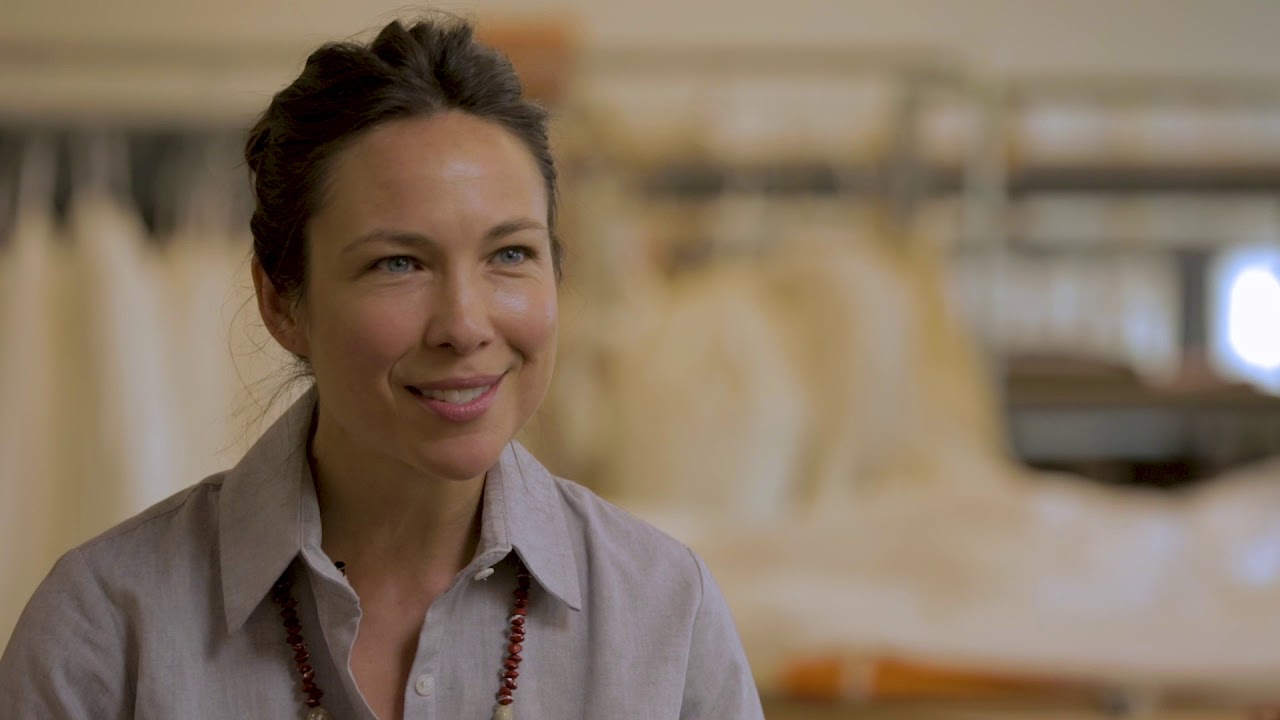
ICSO: Congratulations on receiving the 2025 ICSO International Public Welfare Ambassador award. You’ve achieved remarkable success in dance and writing, while also engaging deeply with social issues. How did this integration of art and social responsibility begin for you?
Emily Johnson: Thank you to ICSO for this honor. My work didn’t start out as “public welfare art”—it began with personal identity. I grew up in a small town in California, and as a child, I witnessed Indigenous communities being displaced from their land and their traditions being marginalized. Many of their voices were silenced. I’ve always believed that art should be a recorder and messenger of human emotions and experiences—not just a stage performance.
Dance gave me a way to express this shared pain, memory, and hope, and also to invite communities to tell their own stories. That became the most valuable part of my artistic process. Gradually, I started to weave their stories into my choreography and document their voices through writing. Over time, I realized that when art and public service intersect, they can create lasting impact. That understanding has guided my creative and social work ever since.
ICSO: Your works are both artistically powerful and socially critical. How do you balance these aspects? Can you share a project that deeply demonstrated art’s social impact for you?
Emily Johnson: The key is respect and listening. Every creation begins with time spent in the community—talking to residents, understanding their backgrounds, and listening to their needs. One unforgettable project was The Dance of Echoes, a collaborative performance with an Indigenous community in California. Through movement, it told stories of their traditional rituals and modern struggles.
During the premiere, when I saw community members crying and applauding, I realized that art can go far beyond performance—it can bridge emotion and reshape social consciousness. In that moment, I understood that public service is not about giving—it’s about awakening collective memory and restoring dignity.
ICSO: You are also the founder of the First Nations Dialogues in New York/Lenapehoking. What inspired this initiative, and how does it influence your artistic and social work?
Emily Johnson: This project stems from my long-term focus on cultural memory and public space. New York and its surrounding regions are part of Lenapehoking—the traditional land of the Lenape people. Over time, Indigenous voices have been erased from the city’s narrative. I believe that true reconciliation must begin with equality and listening.
So I worked with artists, scholars, and community leaders to establish the First Nations Dialogues, a platform that invites Lenape voices back into public discourse—sharing their history, culture, and contemporary experiences. For me, this project is both inspiration and method: it turns abstract social care into tangible public events and artworks, allowing audiences to participate in real social dialogue through art.
I believe the power of art lies not in monologue but in co-presence—creating a shared space where people from different backgrounds can see, understand, and respect one another.
ICSO: Working with marginalized and Indigenous communities can be complex. What challenges have you faced, and how did you overcome them?
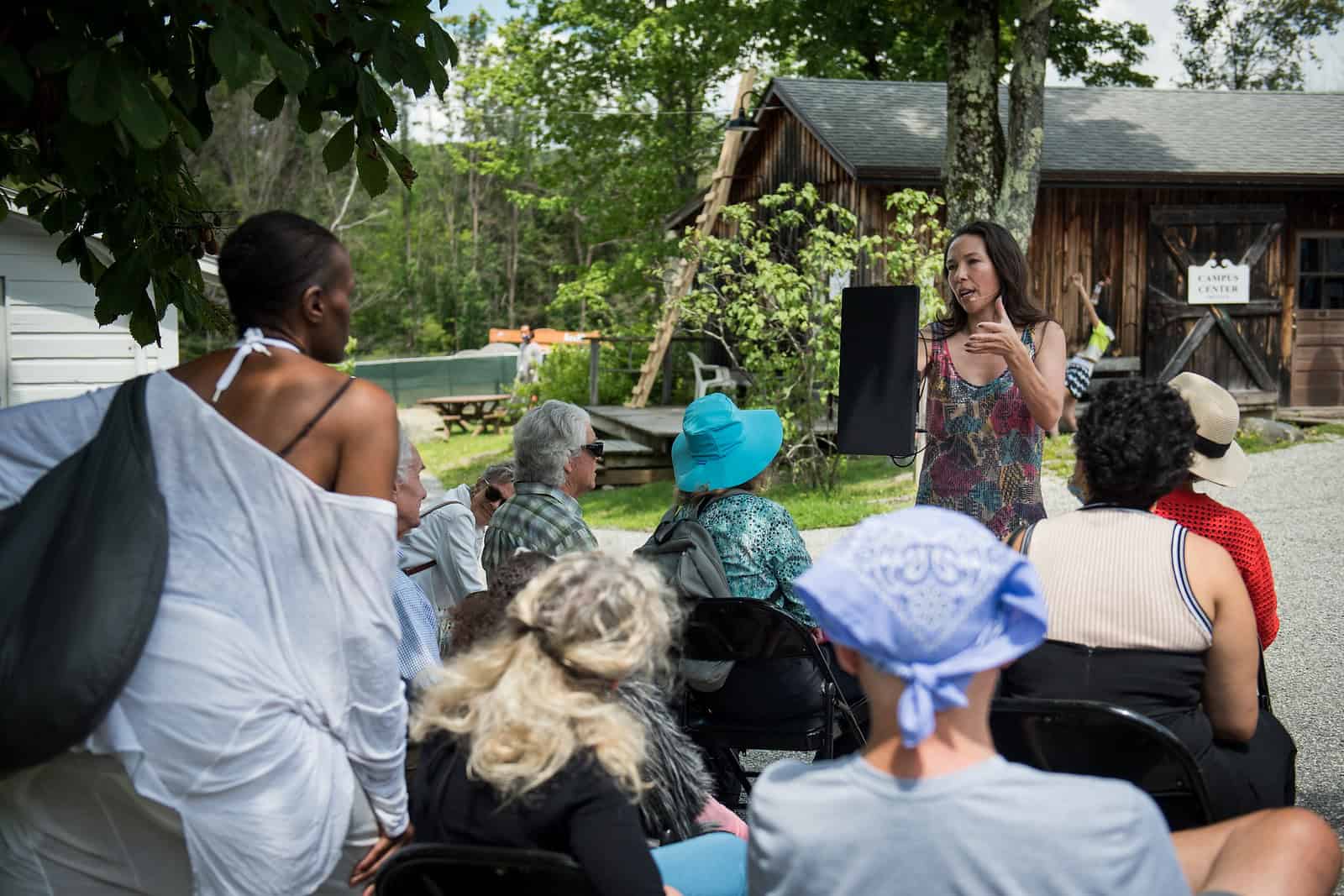
Emily Johnson: The greatest challenge is building trust and bridging cultural understanding. Many communities, after long histories of neglect, are cautious or even skeptical of external projects. I learned that only time and sincerity can break that barrier. I participate in their festivals, share meals, listen to their stories, and co-design how their narratives are represented in performance.
Respecting their cultural rituals, ensuring transparency, and sharing creative ownership are key to building trust. Through repeated dialogue and collaboration, I’ve come to understand that true public service is not charity—it’s co-creation and companionship.
ICSO: You’ve received numerous community and cultural awards. How do such honors influence your public service work?
Emily Johnson: Awards are a form of recognition, but their real value lies in the awareness and resources they bring. After receiving these honors, I’ve been able to connect with more partners, gain funding, and reach broader audiences. They also give me a stronger voice in advocating for cultural preservation and community development. The influence that stems from recognition—when it becomes action—is what truly matters.
Conclusion
Through this interview, we gain a deeper understanding of Emily Johnson’s multifaceted practice in dance, writing, and cultural dialogue—and her profound sense of social responsibility through art. Emily shows that art is not merely an aesthetic expression, but a vital force for empathy, understanding, and coexistence.
Her story demonstrates that when creativity meets social care, art becomes a bridge between worlds—amplifying silenced voices and rewriting forgotten histories. Emily Johnson’s practice reaffirms ICSO’s core belief: every act of listening, every moment of equal dialogue, is a step toward meaningful social transformation.