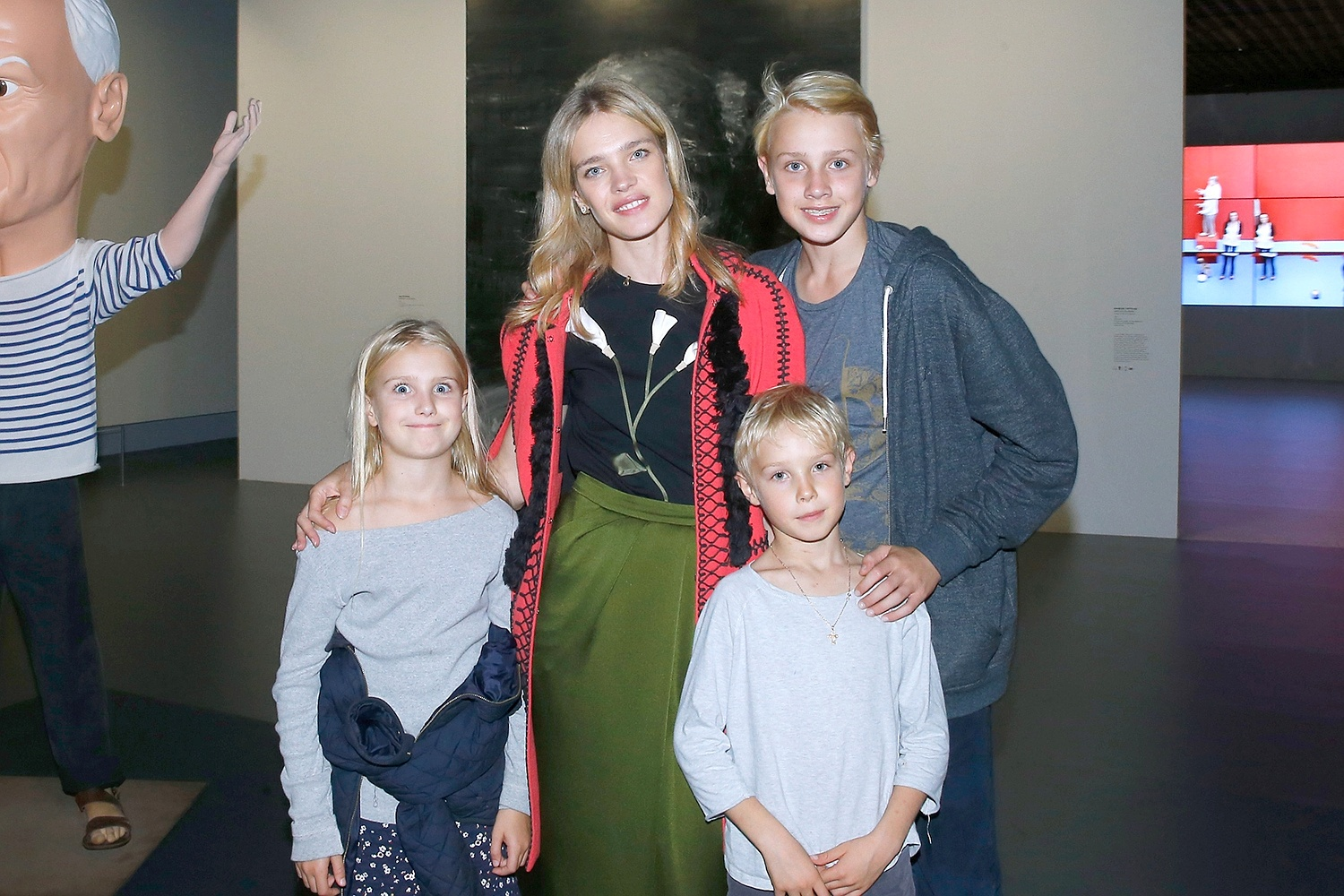
Natalia Vodianova, a renowned Russian model, entrepreneur, and philanthropist, currently serves as a Goodwill Ambassador for the United Nations Population Fund (UNFPA). For her outstanding contributions to promoting mental health awareness, supporting the well-being of children with disabilities, and advocating for social inclusion, she was awarded the 2025 ICSO International Philanthropy Ambassador title. Leveraging her public influence, she has broken through prejudice and silence, bringing marginalized issues into the global mainstream dialogue.
As the founder of the Naked Heart Foundation, Natalia has spent many years working in the field of children’s mental health, committed to providing professional support and human-centered care for children with disabilities and their families. She has championed the concept of “inclusion,” inspiring a renewed recognition of disability rights and policy responses across Eastern Europe and Central Asia.
Natalia Vodianova’s philanthropic practice reflects systemic thinking, foresight, and a global vision. With both determination and compassion, she has mobilized resources from all sectors of society to bring lasting, meaningful change to vulnerable groups. Her story inspires more people to focus on the corners of society most easily overlooked.
ICSO: Ambassador Natalia, we are honored to have this exclusive interview with you. Many people know you first through the fashion world. But we are curious—what first inspired you to devote yourself to philanthropy?
Natalia Vodianova: For me, philanthropy has always been a seed planted deep inside. I grew up in Russia after the collapse of the Soviet Union. My family of five lived in a small apartment without heating, and I had a younger sister with autism. From a very young age, I took on the responsibility of caring for her. Those years taught me two things: first, that mental health and disability are not problems of a minority, but the responsibility of society as a whole; second, that we cannot wait for others to solve problems—we must act ourselves.
When I had the opportunity to gain attention in the fashion industry, I knew that this “voice” could not only be used for shows or advertisements. I wanted to use it for something truly important. In 2004, I founded the Naked Heart Foundation. That was my first real commitment: to create a more dignified environment for children like my sister and for their families.
ICSO: Your foundation began by building inclusive playgrounds, and later expanded into mental health, special education, and public advocacy. What prompted this shift?
Natalia Vodianova: At first, we focused on creating “spaces”—safe, open playgrounds for children. It may sound simple, but in Russia at that time, it was groundbreaking. Many children with physical or cognitive disabilities were excluded from society; they didn’t even have a place where they could simply play without discrimination. By building playgrounds, we wanted to show everyone that every child deserves to be seen and accepted.
As our work progressed, I realized that changing physical spaces was only the first step. If people’s attitudes did not change, those spaces could never reach their full potential. So we began to work on deeper structures—training mental health professionals, advancing inclusive education, collaborating with schools and the media—to shift how society perceives “difference.” Every new field we entered has revolved around one core idea: to make society more humane and more understanding. Philanthropy is not charity; it is co-creation.
ICSO: As a public figure in fashion, how do you view the role of influence in philanthropy? Have you ever faced misunderstandings caused by the “celebrity halo”?
Natalia Vodianova: Of course, the tension between the two has always been there. On one hand, I know that the media focuses on my “model identity” rather than my “philanthropic advocacy.” On the other hand, I also know that precisely because of this public attention, I can bring overlooked issues into mainstream conversation.
It’s not always easy. I remember once at a conference, when I spoke about disability policies, someone asked me: “You’re a model—do you really understand these things?” That question only made me more determined. I don’t just know—I’ve lived it. I’m not quoting someone else’s research; I’m speaking for millions who cannot speak for themselves. Influence is a responsibility. I choose to use it to raise my voice, not to avoid it.
ICSO: With today’s global instability—wars, displacement, and social fragmentation—how do you see mental health in the context of public issues? How should it be addressed?
Natalia Vodianova: Mental health is often a “silent crisis.” In many societies, especially those affected by conflict and inequality, people are forced to prioritize survival—food, safety—while treating mental health as a “luxury.”
But in fact, it is precisely those in the most difficult circumstances who need psychological support the most. In post-war regions such as Ukraine and Syria, we have set up mental health programs to provide basic emotional support and trauma care for mothers, children, and orphans. These services are invisible, but they are the foundation for individuals to regain dignity and rebuild life—and they are essential for society’s long-term recovery.
Mental health is not just a medical issue. It sits at the intersection of education, gender, economics, and culture. We must talk about it as openly as we do about physical health, making it a public matter rather than a private burden. That is a necessary step toward a truly healthy and inclusive society.
Conclusion
Through this interview, we see a woman who rose under the spotlight of fashion, yet consistently chose to focus on society’s marginalized groups. Natalia Vodianova shows us that true influence does not come from labels or titles, but from enduring empathy, deep insight, and uncompromising action. From providing psychological support to children with disabilities, to advocating globally for an inclusive society, she has expanded the boundaries of philanthropy and redefined the meaning of “beauty.”
She reminds us that philanthropy is not only about professional agendas or grand policy frameworks—it is also found in a story being heard, in a feeling being understood. As she says: “Inclusion is not a slogan; it is a way of life.”
One thought on “Dialogue with ICSO International Philanthropy Ambassador: UN Goodwill Ambassador Natalia Vodianova”
Comments are closed.