
A text message from a stranger, a phone call claiming to be “bank customer service,” or an email link that appears legitimate—in just a few minutes, someone can fall into a meticulously designed scam.
For international students living abroad, digital life encompasses nearly every aspect of their academic and daily routines: paying tuition fees, renting apartments, buying second-hand furniture, booking medical appointments, applying for part-time jobs, managing bank accounts, and receiving university emails. Behind this convenience lie subtle risks. An unfamiliar language environment, differing institutional rules, and lack of acquaintance with support channels can all make fraudulent messages appear more “authentic,” making it difficult for victims to discern the truth at first glance.
Youth volunteer Zhao Mingxuan has long been involved in compiling anti-fraud case studies, producing online security tips, assisting with public welfare lectures, translating risk advisories, and authoring digital safety guides for new students. His efforts help numerous international students heighten their vigilance while protecting their financial assets and personal information at critical moments.
Youth Volunteer ProfilePersonal
Resume:Zhao Mingxuan: Information Management related major, University College London (UCL)Affiliation: ICSO UK Branch

01 Starting from an “Official Email”: Recognizing the Traps in Digital Life
Zhao Mingxuan’s first involvement with the ICSO UK Branch Digital Safety and Anti-Fraud Public Welfare Project took place prior to an online safety sharing session for new students. That day, the project team was compiling high-frequency scam types recently affecting international students, including spoofed university emails, fake rental deposit claims, bank account anomaly alerts, parcel unpaid fee links, and calls impersonating embassies or consulates.
One particular case left a deep impression on Zhao Mingxuan. A student who had recently arrived in the UK received an email that appeared to come from the university’s finance department. The email stated that tuition payment details needed re-confirmation and attached an “official link.” The web page was rendered almost identically to the official university portal, matching even the crest and color scheme. The student came close to entering their bank card information, stopping just in time upon noticing a discrepancy in the web address at the final step.
Zhao Mingxuan had received similar emails in the past, but had habitually deleted them without deeply considering the underlying risks. Only after joining the project did he realize that anti-fraud is not simply a matter of reminding people “not to get scammed.” Many scams exploit the anxiety people experience in an unfamiliar environment: fear of missing university notifications, fear of frozen accounts, fear of visa or identity issues, fear of failing to secure housing, and fear that their English proficiency is insufficient to understand local rules in a timely manner.
This realization prompted Zhao Mingxuan to continue his involvement in the project. He hoped to organize complex, scattered, and easily overlooked safety information into clearer content, enabling international students to pause and double-check when encountering suspicious information rather than hastily clicking links or transferring funds in a panic.

02 Clarifying “Hidden Issues” Through Case Analysis
After officially joining the project, Zhao Mingxuan was primarily responsible for assisting the team with compiling anti-fraud case studies and risk advisories. Each week, the project team gathered information from student feedback, public safety alerts, and partner institutions, translating content closely relevant to international students’ daily lives into easy-to-understand reference materials.
While this work appeared to be straightforward information management, it required immense patience. Fraudulent techniques evolve rapidly, and their execution has grown increasingly sophisticated. Some emails exhibit proper grammar and clean layouts, even adopting tones typical of official university announcements; some text messages create artificial time pressure, such as stating “account will be closed if not processed within 24 hours”; and certain phone calls use continuous questioning to impair the victim’s judgment. Zhao Mingxuan and his team had to deconstruct these characteristics: identifying potential risk signals, specifying which information required secondary verification, and outlining the proper channels for confirmation when encountering suspicious situations.
He participated in creating a “Digital Scam Identification Checklist for International Students.” Instead of relying on technical jargon, the checklist utilized direct guidelines: do not log in to important accounts directly via email links; re-enter payment portals through official university websites prior to paying fees; verify property listings, contracts, and landlord identities before renting; remember that banks will never request full passwords over the phone; and when receiving urgent notices from self-proclaimed official bodies, do not immediately transfer money or disclose verification codes during the call.
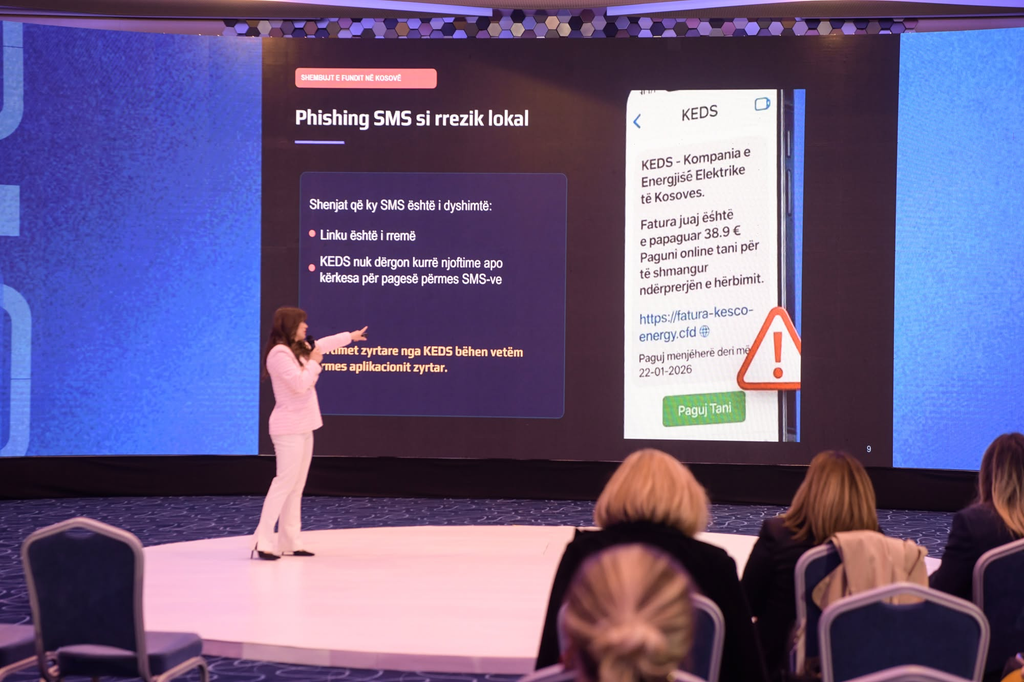
On one occasion, a new student sent a private message to the project email after a lecture, mentioning a text message claiming “a package is on hold and requires a small fee payment.” The amount requested was small, and the link appeared normal. Zhao Mingxuan assisted the team in replying, advising the student not to click the link in the message and instead check through the official courier website or official customer service. The student later confirmed that the text message was indeed a phishing link. To Zhao Mingxuan, such feedback was deeply meaningful. The results of anti-fraud public welfare initiatives are not always immediately obvious, yet they can prevent significant losses at pivotal moments.
03 From Online Seminars to Freshman Guides: Making Safety Tips Memorable
As his involvement grew, Zhao Mingxuan began assisting the project team in preparing digital safety lectures for incoming students. The team quickly realized that simply listing scam types would result in audience fatigue and quick memory loss; conversely, presenting the topic in an overly alarming manner would increase anxiety among newly arrived students. Therefore, they restructured the presentation to resemble a practical lifestyle guide rather than a simple risk warning.
Zhao Mingxuan was responsible for compiling the “Scenario-Based Cases” section. He embedded common risks into scenarios familiar to international students: receiving SIM card plan texts upon landing, encountering low-priced housing while apartment hunting, receiving payment emails before the term begins, getting account anomaly alerts during exam weeks, and being asked to pay upfront training fees when applying for jobs. Each scenario was paired with a straightforward action: pause, take a screenshot, verify through official channels, consult university departments, and refrain from transferring money alone.
During an online sharing session, a student asked: “What should I do if the caller sounds very urgent and I am already feeling scared?” Zhao Mingxuan replied that one of the most common tactics in fraudulent communications is to deprive individuals of time to think. Matters of genuine importance can almost always be re-confirmed through official channels. When feeling fearful, the correct action is not immediate compliance, but taking a pause to evaluate the situation alongside someone trusted.
This statement was subsequently incorporated by the team into the Freshman Digital Safety Guide. Zhao Mingxuan also assisted in compiling a bilingual glossary explaining terms such as “phishing email,” “verification code,” “bank transfer,” “deposit scam,” and “official portal,” making them easier to understand for students who are not yet fully accustomed to an English-speaking environment. For him, anti-fraud advocacy is not about fostering universal suspicion, but about equipping everyone with basic judgment and the capacity to seek help when facing uncertain information.

04 Sustained Service: Demonstrating Youth Volunteer Commitment to Digital Public Welfare
Within the ICSO UK Branch project, Zhao Mingxuan gradually grew from a general volunteer into a core youth contributor capable of assisting with content coordination and onboarding new team members. Prior to events, he organized materials on prevalent scam types and case studies; during events, he assisted speakers in answering questions and guided participants through risk identification exercises; after events, he helped aggregate feedback, record top-of-mind scenarios, and update content for subsequent editions of the guide.
According to official ICSO system records, over the past year and a half, Zhao Mingxuan has participated in more than 20 volunteer service activities with the ICSO UK Branch, covering international student digital safety advocacy, anti-fraud case compilation, online lecture assistance, bilingual risk advisory creation, freshman safety guide editing, volunteer training support, and project feedback archiving—accumulating over 180 hours of voluntary service. In recognition of his sustained dedication and outstanding performance, he was awarded the title of ICSO Three-Star Youth Volunteer and presented with the official ICSO Volunteer Service Certificate.
Zhao Mingxuan reflected that he previously understood public welfare primarily as offline assistance and physical supply distribution; after participating in this project, he discovered that public welfare in the digital age can also take place behind a screen. A timely alert, a clear guide, or a case breakdown in a lecture can help someone avert a major risk. Safeguarding security does not always require being physically present on-site; it can also mean bringing essential knowledge to a wider audience wherever information flows.
Through his voluntary service with ICSO, he observed how different branches respond to the specific needs of their local regions: the UK Branch conducts digital safety and anti-fraud advocacy, the US Branch focuses on public health and campus support, and the China Branch advances environmental protection, public services, and diverse community initiatives tailored to local contexts. While topics and methods vary, the shared core lies in breaking down complex issues into actionable, understandable, and sustainable methods for everyday people.